
The Born Outdoor Badger Bedroll for vehicle-based and outdoors adventure
With apologies to a whole bunch of fellow writers and editors, I loathe the word “ultimate.”
First, it’s as overused as other fad adjectives I can think of (such as “tactical”). Second, it’s so subjective as to be valueless except to the person overusing it. Is a Rolex the ultimate watch? You probably don’t think so if you wear something from Patek Philippe or Vacheron Constantin. Finally, even if you can find a product that might reasonably be described as “ultimate,” it’s likely to be eclipsed by something “more ultimate” in a year or two.

So I’m not going to refer to the Born Outdoor Badger as “the ultimate camp bed.” I’ll have to manage with lesser accolades.
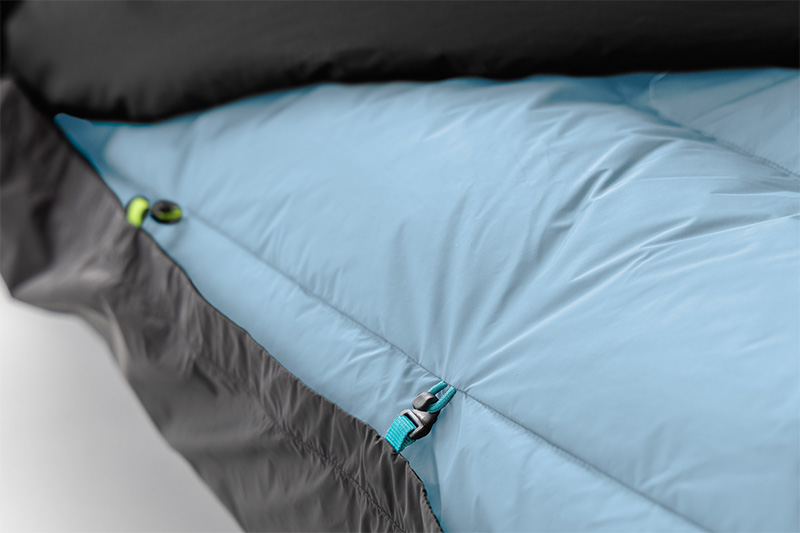
Think of the Badger as a traditional Aussie “swag” brought into the 21st century. The $400 core of the system is a shell comprising a bottom of 100-percent recycled 600-denier ripstop polyester oxford with a waterproof coating, and a zippered top of 210-denier nylon oxford, with a bit of stretch and breathability. The sides are reinforced with closed-cell foam to stay erect and act as a dam to contain sheet and quilt edges, and incorporate pockets at the head for phones or flashlights. Elastic straps at each interior corner secure the (extra cost) mattress, and snap loops at the foot secure any of several styles of (extra cost) sheets and quilts. External snap straps secure the (yes, extra cost) protective footprint.

In its basic assembled form the Badger comprises the shell, a luxurious, 4.25-inch-thick, 8.0-r value, 30-inch-wide Thermarest MondoKing 3D self-inflating mattress, a fitted under-sheet (either cotton/poly percale or warmer all-cotton flannel) and flat top sheet (ditto), and a quilt (either light synthetic or warmer 600-fill down). In the percale/synthetic configuration the combination will set you back $780; bumping up to the warmer setup will add $40. For colder weather you can combine both quilts. The protective footprint is $65. While the rolled-up Badger transports easily, you can add a very well-made portage duffel for $185.
Your eyes are by now rolling with dollar signs like a slot machine, and indeed this is a pricey system. Check off every option for both three- and four-season sleeping (plus the available pillow) and you’ll be into four figures.

But how well does it work? After all, even when camping, sleeping is still a third of your life. Many of us are happy to drop $2,000 on a Recaro seat in which we’ll spend no more time. I’ve passed enough restless and/or cold nights on half-inch Ensolite in an inadequate bag to know the folly of false economy in a sleeping system—but I also have several goose-down sleeping bag/Thermarest mattress combinations that are quite comfortable and which cost notably less than the Badger’s total.
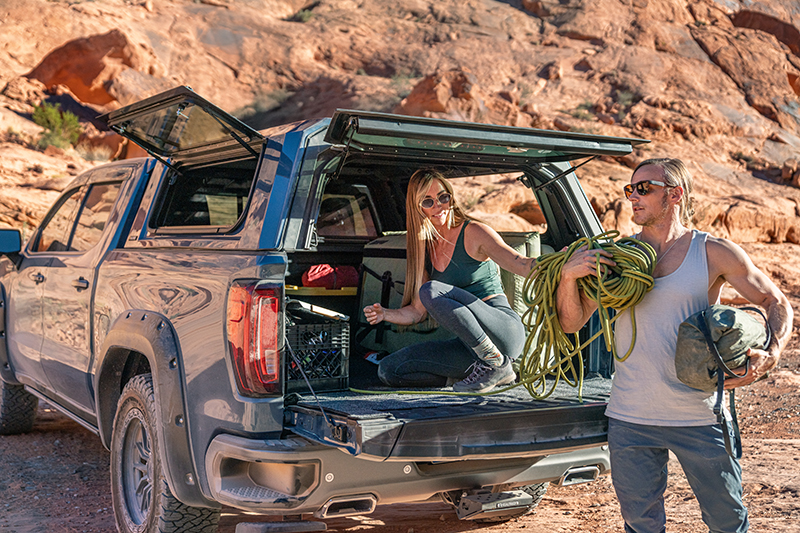
I tested the Badger on a drive from Arizona to Alaska. Despite the adventurous-sounding itinerary, it was a “working” trip—I was hauling a cargo trailer packed with household goods and furniture to a cabin we’d bought in Fairbanks, and I needed to get there as quickly as possible. So I had no time to seek out picturesque campsites each night; I simply drove for as long as was comfortable (average 700-750 miles) and found the nearest convenient spot at which to stop, make a quick dinner, and roll out the Badger in the bed of the Tundra. I never even had an opportunity to set up a glam field shot of it.
Simply put, the Born Badger was far and away the most comfortable camp bed I’ve ever used.

Deploying it was easy, as everything rolled up in the shell. All I had to do was undo the G-hook compression straps, fling it flat and open the Thermarest’s self-inflating valve. (As with all Thermarests I’ve owned, I found that adding a few manual breaths just before closing the valve firmed up the mattress nicely.) The flannel sheet set was ideal—breathable and surprisingly cool in the southern part of the trip, cozy in freezing weather in Canada’s Rockies. The multi-layer top insulation handled the climatic gradient from latitude 30 to 65 without breaking a sweat, as it were. With the sheets and quilt snap-secured to the bottom of the mattress there was no chance of them riding up and giving me cold feet.
What makes the Badger stand out is not any one of these things, but the fact that the combination of real sheets and quilts, plus the Thermarest’s 30-inch width and vertical sides, make the Badger feel like a bed rather than a sleeping bag—again, much like a traditional Aussie swag except at about half the weight and bulk, and with the advantage of a modern self-inflating mattress.

As a final testament to the Badger’s comfort, one of the items of furniture I brought up in the trailer was a full-size sofa sleeper, originally equipped with a futon but later with six-inch-thick foam slabs. Roseann and I slept on it for ten years at Ravenrock, our cottage in the desert southwest of Tucson. I moved it into the living room of the Fairbanks cabin—and kept right on sleeping on the Badger until Roseann arrived and we bought a regular bed and mattress. The Badger offered a better night’s sleep.
Perfection? No, but aside from the sticker shock I have little but minor suggestions. I wish the company offered a package deal with at least a token discount. I’d like to have an extra set of snaps for the sheets and quilts about two feet up from the foot of the mattress, on both sides, just to further contain them. And the tabs on the existing snaps are so short they’re difficult to pull apart.

My only other suggestion would be for the company to offer a smaller—i.e. narrower—size. Luxurious as it was, at my 150 pounds I actually found the Badger larger than necessary. I’d love to see a companion built around, say, the 25-inch-wide Thermarest LuxuryMap mattress. A pair would fit into smaller tents that way, in addition to saving a little money.
If you’re debating about what basic combination to order, I’d suggest the flannel sheets, which work just fine in warm weather and offer a little extra breathability between you and the mattress, along with the down quilt. On warm nights you can just pull up the sheet; as it gets colder pull up the quilt loosely, or tuck it snugly around you and zip up the top cover part way.

You might wince while handing over your Amex for a Born Badger, but I’m betting the pain will fade away the first night you spend in it after a long, long drive.
And that is – ultimately – all I have to say.
Learn more by visiting the Born Outdoor website at www.bornoutdoor.com.
OutdoorX4 Magazine – Promoting responsible vehicle-based adventure travel and outdoors adventure