Jeep Announces 2027 JL-2A
September 20, 2026
There is a reason the Willys CJ-2A still resonates with people who spend their weekends—and sometimes much longer—beyond the pavement.
It was never intended to be a luxury vehicle or a recreational toy. The CJ-2A was a tool. It carried supplies, worked fields, crossed rough ground and opened access to places where the road was little more than a suggestion. For a generation of owners, four-wheel drive wasn’t about conquering obstacles for the sake of it. It was about getting the job done and getting home.
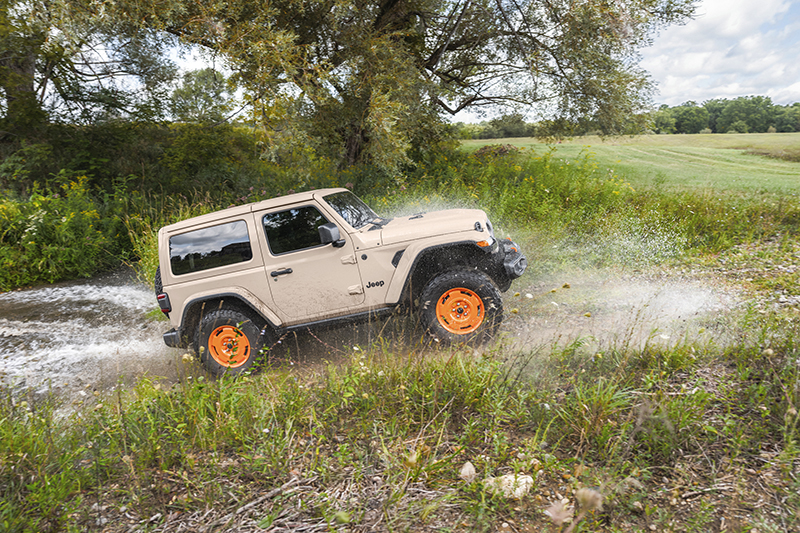
The new 2027 Jeep® Wrangler JL-2A is the 11th drop in the Jeep brand’s Twelve 4 Twelve series, pairing legendary Trail Rated capability with authentic design cues inspired by the original Willys CJ-2A, the first Jeep vehicle designed for civilian use.
More than eight decades later, Jeep is drawing on that same spirit with the 2027 Jeep Wrangler JL-2A, the 11th release in the brand’s yearlong Twelve 4 Twelve series.
The JL-2A takes its cues directly from the 1945 Willys CJ-2A, translating some of the earliest civilian Jeep’s most recognizable details into a modern Wrangler. The result is less a nostalgic recreation than a contemporary 4×4 built around a familiar idea: a vehicle should make it easier to go farther.

“The original CJ-2A represents a defining chapter in Jeep brand history. It is the moment the Jeep vehicle found a new purpose in communities across America,” said Branden Coté, Jeep brand CEO. “More than eight decades later, the 2027 Wrangler JL-2A brings that story full circle, carrying forward an iconic silhouette shaped by 85 years of continuous 4×4 leadership while honoring the original through unmistakable design details and delivering the freedom, adventure and legendary capability that will take a new generation wherever the trail leads.”
Where the Jeep Story Became Civilian
The story begins in July 1945.
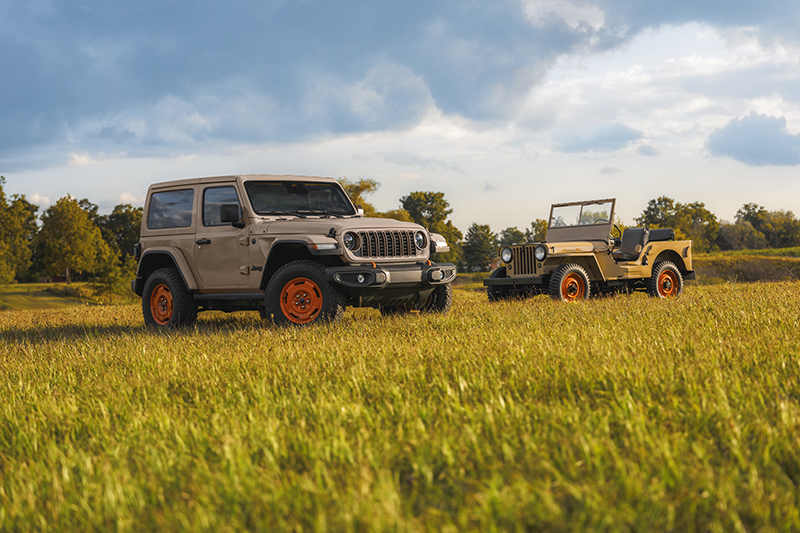
With World War II coming to a close, the battle-proven Willys MB was adapted for a very different kind of work. The resulting Willys CJ-2A was the first Jeep vehicle specifically designed for civilian use and established the Civilian Jeep lineage that would eventually lead to today’s Wrangler.
Built by Willys-Overland in Toledo, Ohio, the CJ-2A was designed with utility in mind. A tailgate made loading easier. A rear power takeoff allowed the vehicle to operate equipment. Larger headlights improved visibility. And the seven-slot grille became one of the most enduring visual signatures in the 4×4 world.
It also had something that many purpose-built machines of the era lacked: personality.
Harvest Tan with Sunset Red wheels. Pasture Green with Autumn Yellow wheels. The CJ-2A may have been built to work, but its owners weren’t expected to settle for anonymous.
That combination of mechanical purpose and unmistakable character is precisely what Jeep is revisiting with the JL-2A.
Familiar Shape, Different Era
The 2027 Wrangler JL-2A doesn’t attempt to reproduce a CJ-2A. Instead, it takes the original’s visual language and applies it to a Wrangler built for the realities of modern trail travel.
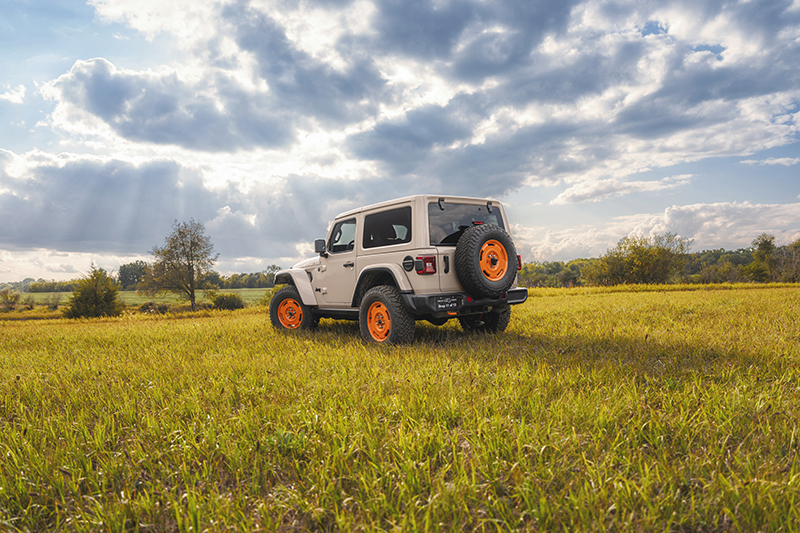
The color palette immediately establishes the connection. Gobi, available on the two-door, draws inspiration from the CJ-2A’s Harvest Tan, while ’41 is offered on the four-door. Bright White, Sting Gray, Ghost and Joose round out the available colors.

Then there are the wheels.
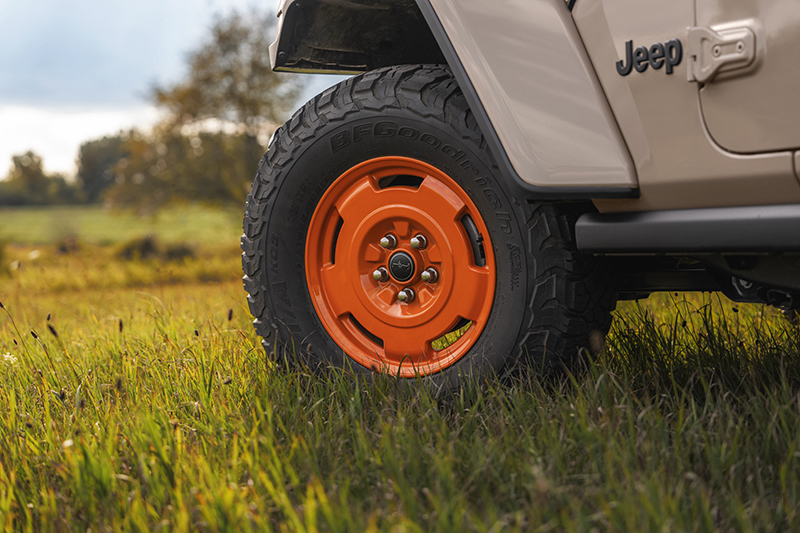
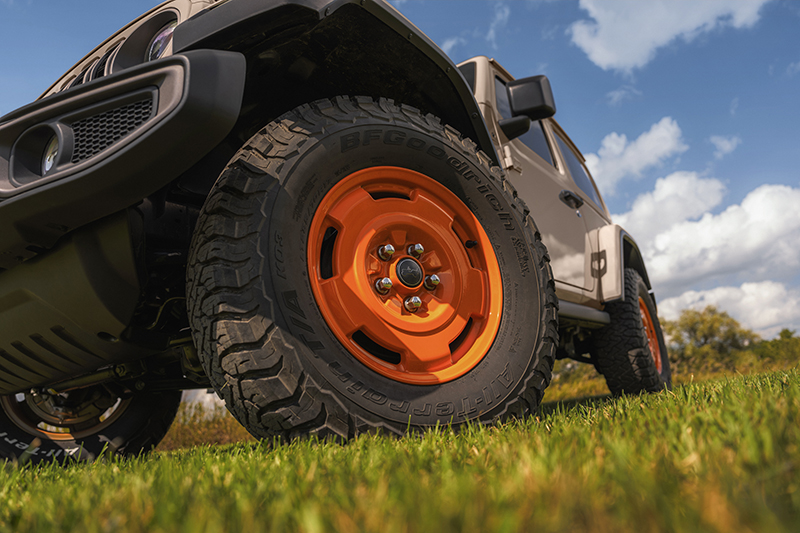
The JL-2A gets exclusive 17-inch retro wheels finished in Joose, a deliberate reference to the Sunset Red wheels offered on early civilian Jeeps. They’re wrapped in 33-inch BFGoodrich KO2 all-terrain tires, giving the package a stance that looks as appropriate on a remote two-track as it does parked outside the trailhead.
Body-color fender flares and a three-piece hardtop keep the exterior relatively clean, while orange front and rear tow hooks provide a functional-looking contrast. Dark Metallic Grey grille accents give the familiar seven-slot grille a contemporary interpretation without losing the connection to the vehicle that started it all.
For an enthusiast, the appeal is in the details. None of them is particularly complicated on its own. Together, they make the JL-2A immediately recognizable as something rooted in Jeep’s earliest civilian history.
The Heritage Continues Inside
The CJ-2A’s influence isn’t limited to exterior trim.
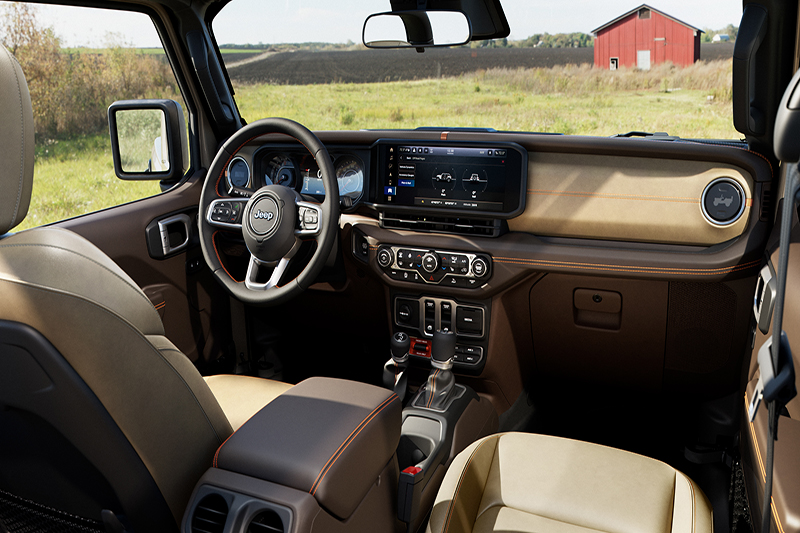
Jeep developed a dedicated interior combination for the JL-2A, using color and material to reference the warmth and character of the original rather than simply scattering heritage badges around the cabin.
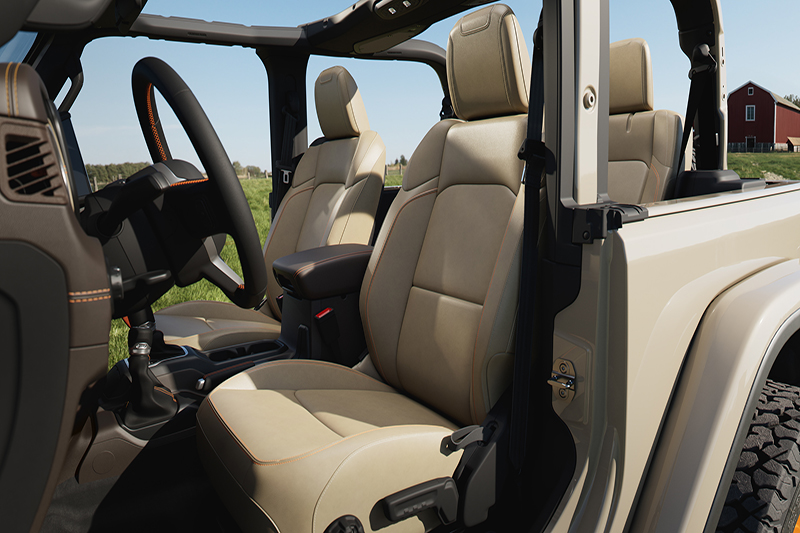
Nappa Heritage Tan leather covers the seats, with Nappa PUR used on the instrument-panel mid-bolster. Bison Brown appears across the door panels, lower instrument panel and center console, while Desert Orange stitching provides a visual connection to the Joose wheels outside.
There are smaller details for those willing to look for them.
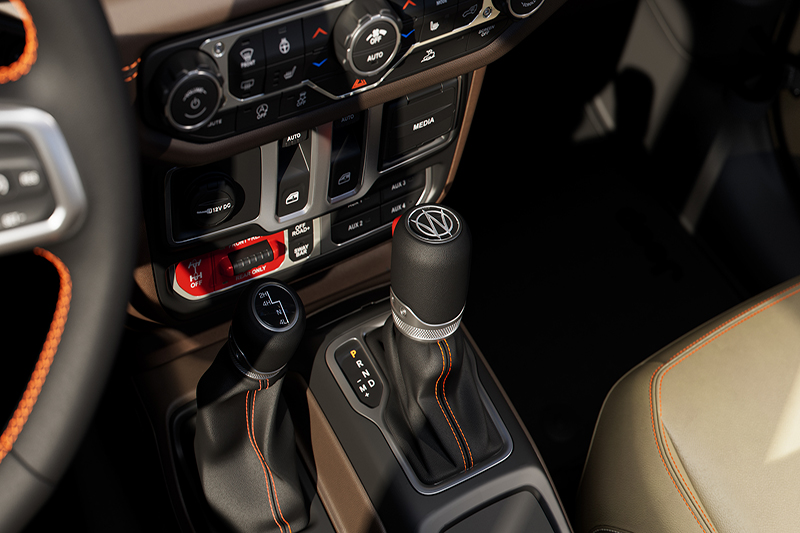
An exclusive Willys-Overland satin-chrome shifter medallion incorporates heritage graphics, while the HVAC vent graphics feature the seven-slot grille on one side and a Willys silhouette on the other.
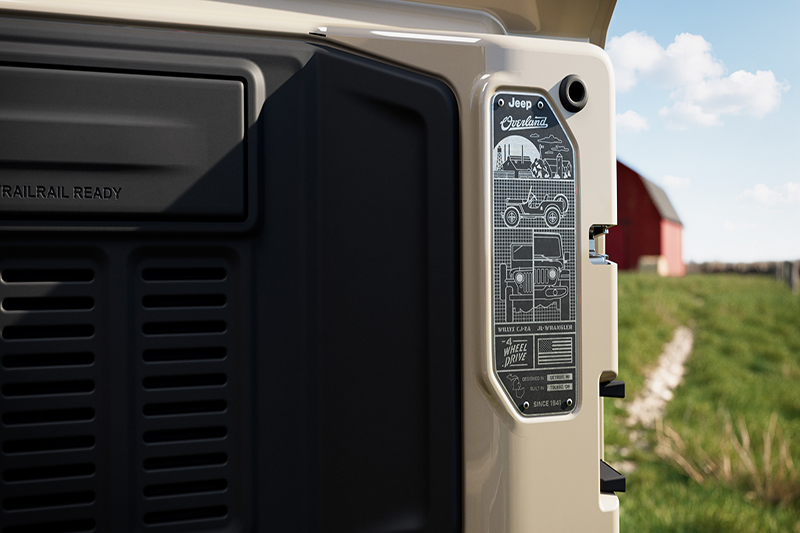
The rear swing gate carries perhaps the most direct historical reference: an exclusive plaque recreating the artwork of the original CJ-2A dashboard data plate. Farm and factory scenes reflect the roles these early Jeeps played when their definition of adventure was often simply getting the work done in places a conventional vehicle couldn’t reach.
Equipment for the Long Way Around
The JL-2A’s appeal isn’t entirely about nostalgia.
Standard equipment includes the Convenience Group, with remote start, an auto-dimming rearview mirror and universal garage-door opener. More relevant once the pavement disappears is the front TrailCam with integrated washer, which helps the driver see the terrain immediately ahead when picking a line through technical sections.
And while today’s overland travel looks very different from the work undertaken by a CJ-2A in 1945, the underlying requirement hasn’t changed much: the vehicle needs to be capable enough that the terrain doesn’t dictate where you stop.
The 33-inch all-terrain tires, tow hooks and TrailCam are the obvious trail-oriented pieces. The rest is the intangible quality Wrangler has carried forward for generations—the ability to turn a road’s end into the beginning of the journey.

Eighty Years Later, the Idea Still Works
The most interesting thing about the CJ-2A isn’t necessarily its shape. It’s the reason it existed.
It was a vehicle designed to expand what its owner could accomplish.
That idea has survived remarkably well. Today, a Wrangler might spend its weekdays commuting and its weekends carrying recovery gear, camping equipment, spare fuel, food and a few days’ worth of supplies toward a trailhead miles from the nearest pavement. The technology and expectations have changed. The destination may have changed, too.
But the appeal of a vehicle that can take you beyond the mapped end of the road hasn’t.
The 2027 Jeep Wrangler JL-2A is scheduled to open for orders in October. The package carries an MSRP of $4,995, or $115 more than a similarly equipped Rubicon, bringing its exclusive heritage-inspired equipment and design details to the Wrangler lineup.
The CJ-2A helped establish the idea that a Jeep could be more than a military machine. Eighty years later, the JL-2A takes that same chapter of Jeep history and points it toward a new generation of dirt roads, trail systems, campsites and places that still require four-wheel drive to reach.
The road may have changed. The reason to leave it hasn’t.
OutdoorX4 – Promoting responsible vehicle-based adventure travel and outdoors adventure